Vessels Carved by the Earth: Reflections on Natural‑Stone Vases
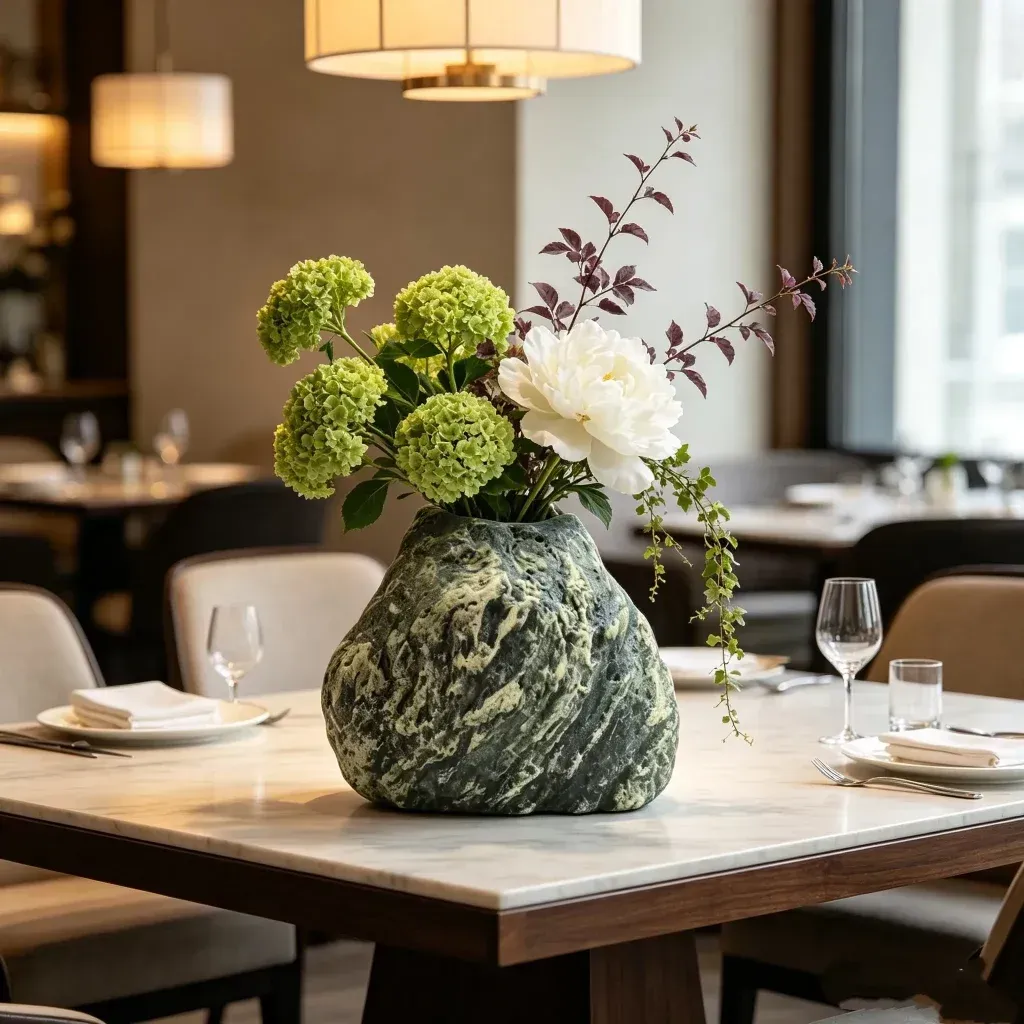
We live surrounded by surfaces polished to meet our hunger for flawlessness.
Our eyes grow accustomed to uniform color, predictable lines, the sterile neatness of things manufactured to satisfy a standard.
Yet nature never obeys human ideas of perfection.Alice Walker wrote, “In nature, nothing is perfect and everything is perfect.”
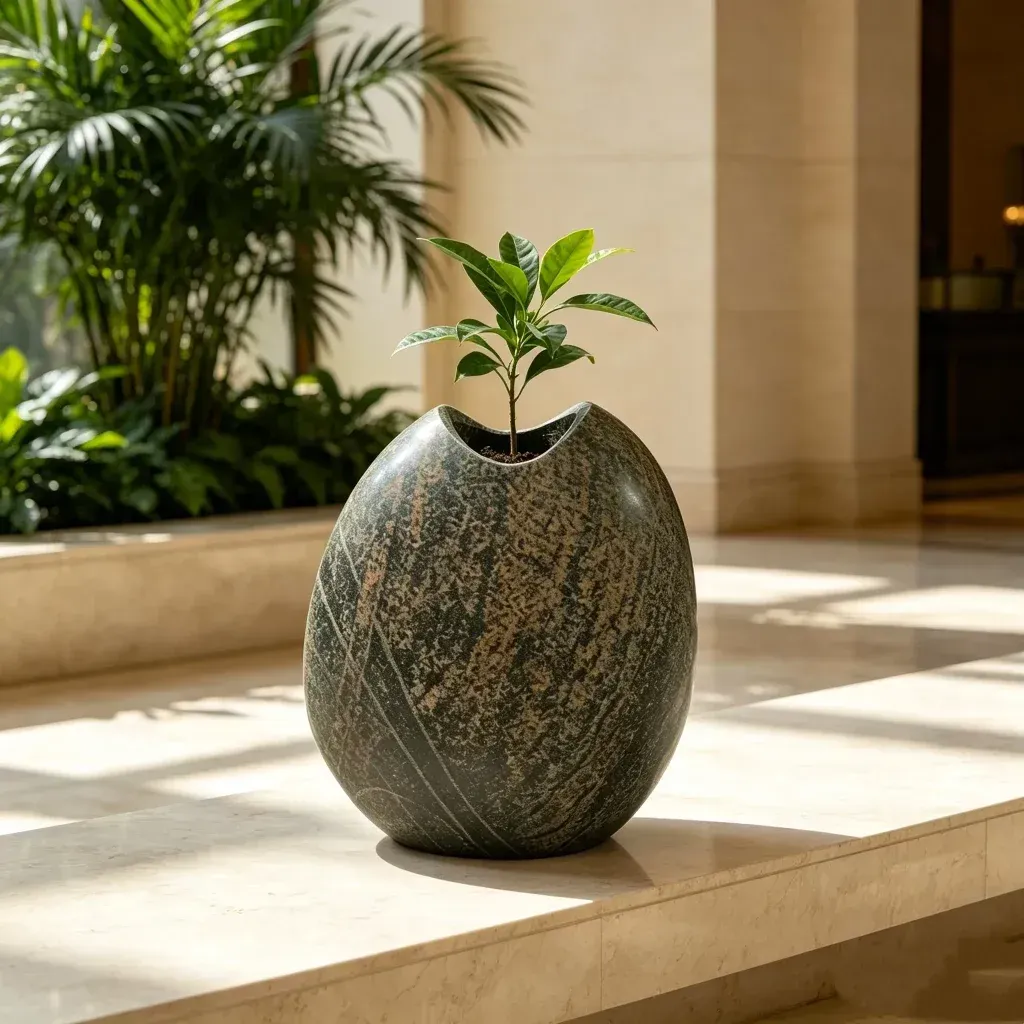
This truth stands plainly before us in a natural‑stone vase.Its swirling veins were not painted by human hands. Its streaks of color were not adjusted in a workshop.
Centuries upon centuries of water, pressure, mineral movement wove those patterns deep inside rock.Human hands merely hollowed the stone, releasing a form the earth had already shaped.
No two such vases can ever be identical. A faint streak, a soft indentation, an unexpected shift of tone — these are not defects to overlook.
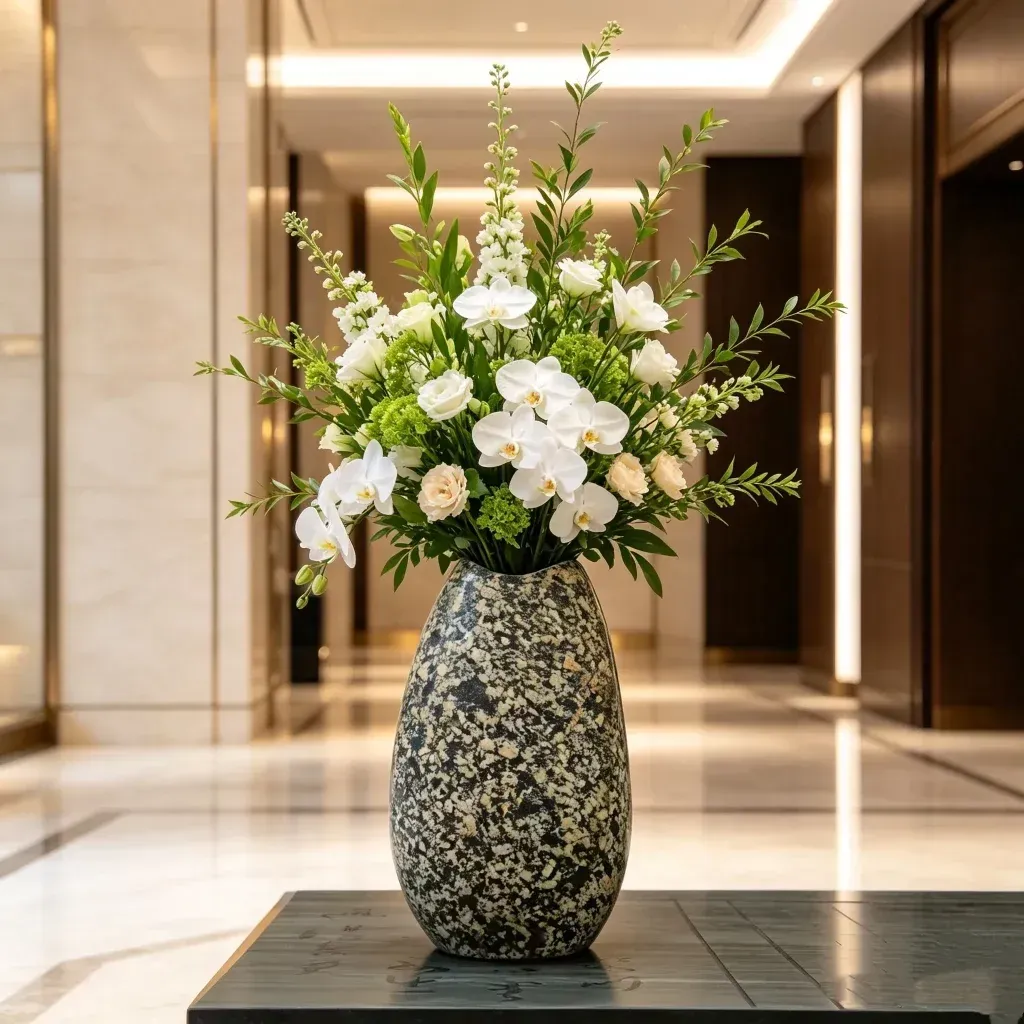
They are chapters of an unwritten biography, frozen inside stone.
Ralph Waldo Emerson observed that “The invariable mark of wisdom is to see the miraculous in the common.” Too often we rush past ordinary objects, blind to the miracle locked within them. Set fresh flowers within this stone vessel, and a quiet dialogue begins.
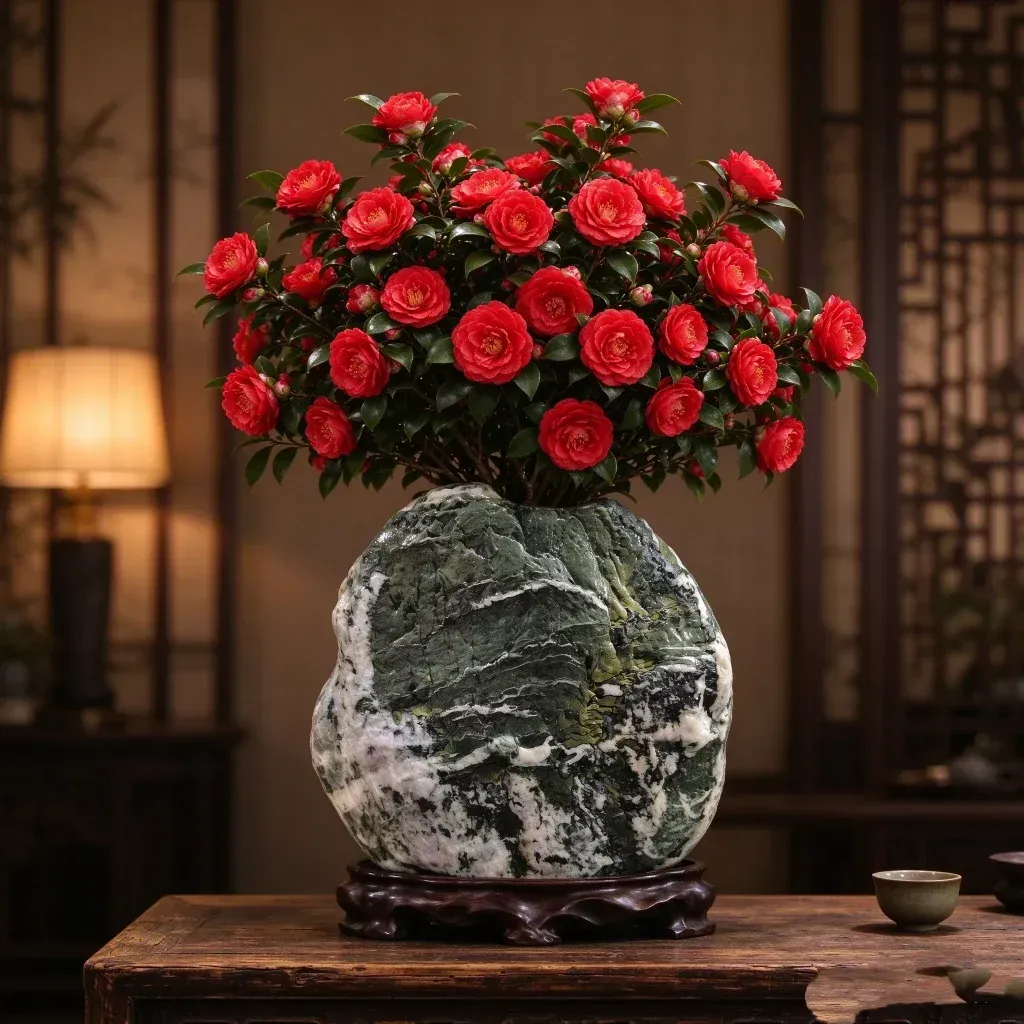
Fragile, short‑lived bloom rests against rock forged over millennia. Soft petals brush hard mineral surfaces; fleeting life meets enduring silence. There is profound spiritual weight in that contrast.
Edgar Allan Poe once noted, “There is no exquisite beauty… without some strangeness in the proportion.”
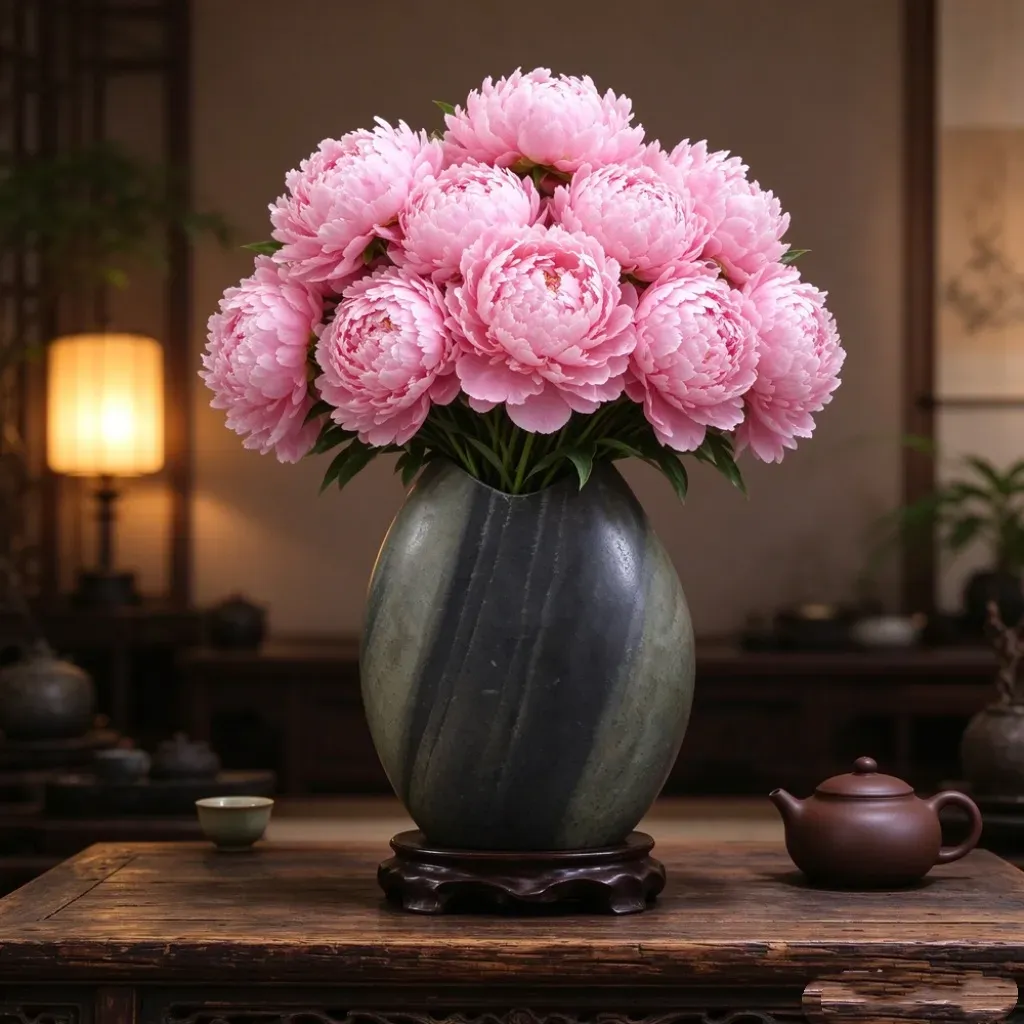
That strangeness, that gentle irregularity, is exactly where the soul of the stone vase resides. It refuses to flatten itself into the safe, unrisky aesthetics mass‑production demands. It asks us to slow down, to observe deeply, to stop judging beauty by rigid checklists. This lesson spills beyond stone and flowers, deep into our own lives.
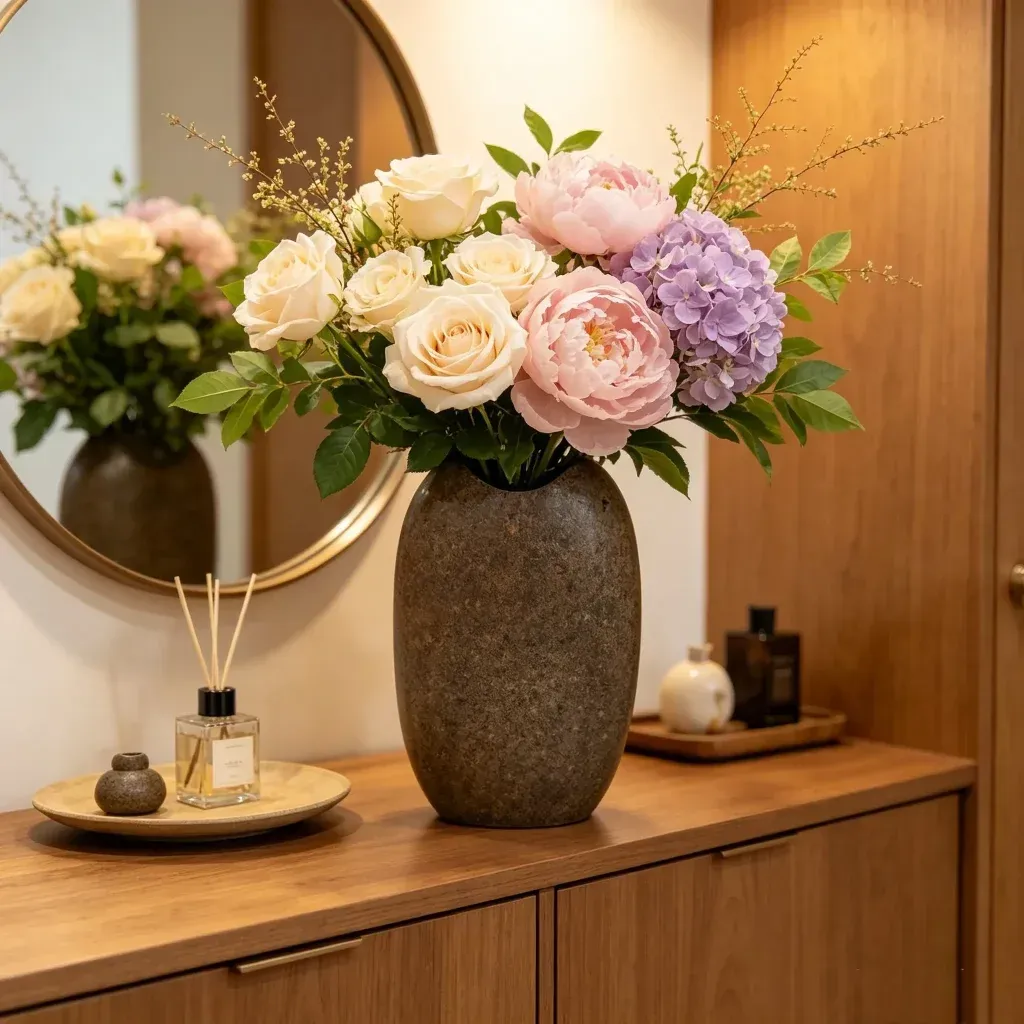
We, too, carry marks formed through pressure and passage of time: scars, soft unevenness, parts of us that refuse to fit neat molds. Society urges us to sand those edges smooth, to erase anything that breaks uniformity.But the stone reminds us: those marks are where our authenticity lives.
Mary Oliver famously questioned: “Tell me, what is it you plan to do with your one wild and precious life? To embrace our own unpolished texture is one answer to that question. The stone vase does not shout for admiration. It sits still, patient, unapologetic for what it is.
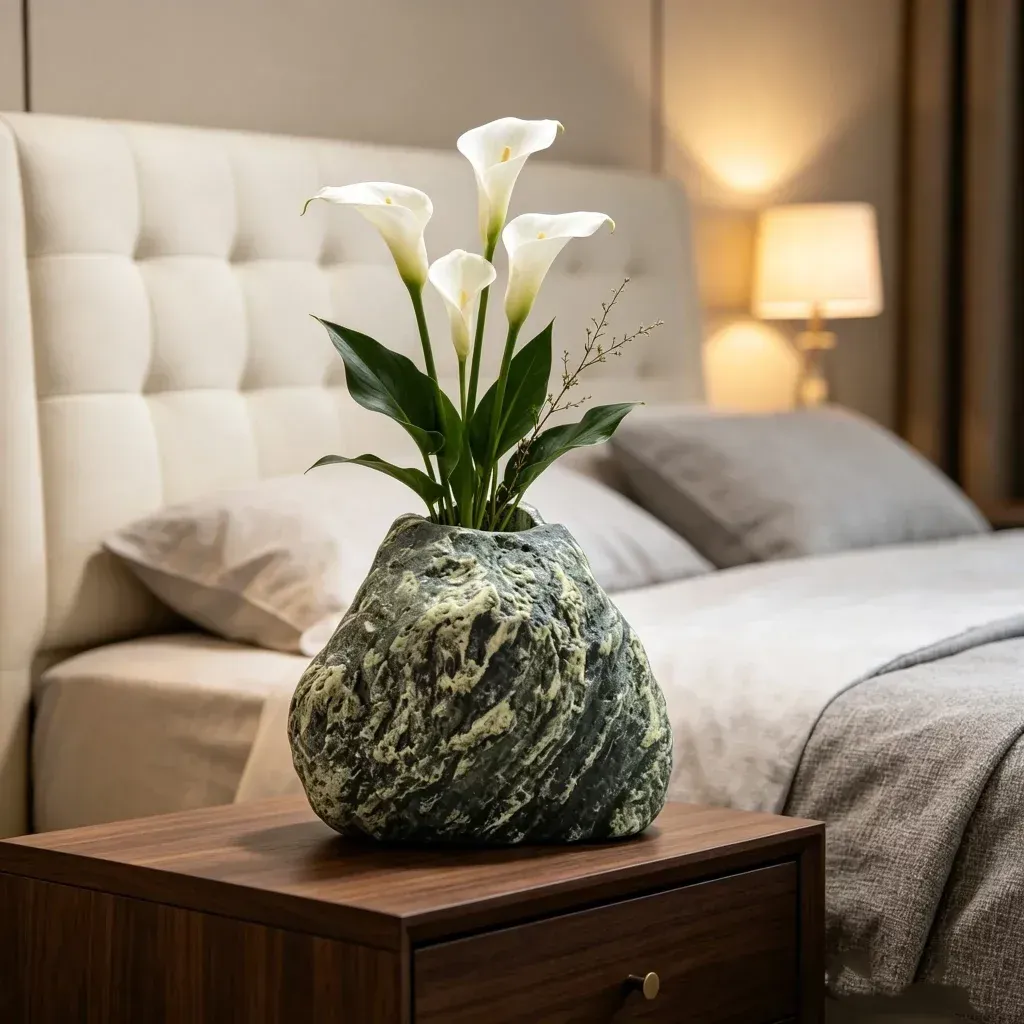
It does not compete for attention. It simply bears witness: beauty forged slowly by nature cannot be duplicated, cannot be rushed, cannot be manufactured.In a world obsessed with speed and copies, that is radical inspiration.We do not need every object around us to be flawless.What we need are quiet witnesses to time’s power, pieces that nudge our hearts toward wonder, humility and acceptance A natural‑stone vase is exactly such a witness.
Gaze long enough at its wandering patterns. You will feel the earth’s slow heartbeat beneath your fingertips.And you may remember: all things of lasting meaning take time to become themselves.